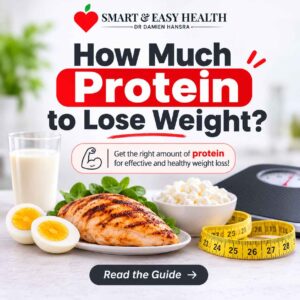

If I had a dollar for every time a patient asked me here at Smart & Easy Health, “Okay, but how much protein to lose weight do I actually need?” I’d probably retire early. It’s one of the most common questions I get, and honestly, it’s a fair one. Everyone online seems to have a different number.
So let’s keep this simple. I’ll walk you through why protein matters, how to figure out your own number, and what to put on your plate. No math degree needed.
Think of protein as the teammate that quietly does a lot of the work. It’s not flashy. But it helps in three big ways.
Ever eaten a bowl of cereal and been hungry an hour later? That’s what happens when a meal is low in protein. Protein is the most filling nutrient we have. Scientists call it satiety. When you eat enough of it. You stop thinking about snacks every twenty minutes. That makes sticking to a calorie deficit a lot less miserable.
When you lose weight, your body doesn’t just burn fat. It can also break down lean muscle mass, especially if you’re not eating enough protein. Losing muscle slows your metabolism, which is the last thing you want. Protein supplies the amino acids your body needs to hold onto that muscle. So more of the weight you lose is actual fat. If you are trying to figure out “how much protein to lose weight” while protecting your lean muscle, prioritizing this macro in every meal is essential.
Here’s a little bonus. Digesting food burns calories, and protein burns more than carbs or fat. This is called the thermic effect of food. Is it a magic trick? No. But it does give you a small edge, and small edges add up.
This is the part everyone wants, so here we go for most adults trying to lose weight. A good target is about 1.2 to 1.6 grams of protein per kilogram of body weight. If you think in pounds, that’s roughly 0.5 to 0.7 grams per pound.
Let’s say you weigh 70 kg (about 155 pounds). Multiply 70 by 1.2, and you get 84 grams. Multiply by 1.6, and you get 112 grams. So your sweet spot is somewhere between 84 and 112 grams a day. That answers the question of how much protein to lose weight, or how many grams of protein to lose weight, for someone that size.
This works for protein for weight loss for women, too. The formula is the same. It’s your body weight that sets the number, not your gender.
A quick caution: if you have kidney disease or any other medical condition, talk to your own doctor before bumping up your protein. I mean that.
Here’s something people skip. Meal timing matters a little. Most folks eat a tiny bit of protein at breakfast, a medium amount at lunch, and then a giant serving at dinner. Your body does better when you spread it out. Aim for around 20 to 30 grams at each meal. It keeps hunger steadier and gives your muscles a regular supply all day.
Not all protein comes packaged the same way. If you’re after high-protein foods for weight loss, or high-protein, low-calorie foods, here’s where I’d start.
Chicken breast, turkey, fish, shrimp, and egg whites are all lean protein. You get a lot of protein for relatively few calories. Fish like salmon adds healthy fats on top, which is a nice bonus.
You don’t need meat to hit your number. Plant-based protein from tofu and legumes like lentils and beans works great. They also bring fiber, which helps with fullness even more.
Greek yogurt is my go-to. A small cup can pack close to 15 to 20 grams. Cottage cheese, skim milk, and string cheese are easy too. And yes, protein powder can be handy when life gets busy, which I’ll get to in a second.
Breakfast is where most people fall short, and it’s the easiest place to fix. If you want more ideas, I put together a whole list of high-protein breakfast ideas for weight loss.
In the meantime, try these. My low-calorie egg bites are perfect for making ahead on Sunday and grabbing all week. If you like a little heat, the spicy kimchi scrambled eggs are packed with protein and ready in minutes. Want something with Greek yogurt? Check out the gut-friendly berry parfait. It feels like dessert, but it isn’t.
Lunch and dinner are easier than you’d think. Build your plate around a protein first, then add veggies, then a smart carb. That’s it.
Need inspiration? Browse my high-protein diet for weight loss and my weight loss dinner ideas for more.
Two that I like best: the spicy Asian shrimp pasta with a lot of protein, which is not as heavy as it seems to be, and the 20-minute Asian salmon dish that is accompanied by five simple vegetable side dishes.
Here’s the truth. At some point, you’ll crave something sweet. The good thing is that you don’t need to go cold turkey on this.
Are you looking for snacks that are high in protein for losing weight? You might want to try the banana nut protein muffins because there’s no added sugar in these muffins, and they will never give you a muffin top. For those times when your chocolate cravings strike, I’ve got you covered with my protein-filled chocolate pudding.
I see the same slip-ups again and again:
For more everyday habits like these, see my nutrition tips for weight loss.
A healthy range for the majority of individuals would be around 1.2 to 1.6 grams per kilogram of body weight. This would put most adults in the range of 80 to 120 grams per day.
Food first, always. Whole foods give you extra nutrients and keep you fuller. But protein powder is a perfectly fine backup when you’re short on time or can’t hit your goal otherwise.
You can’t pick where fat comes off, so sadly there’s no magic for one spot. What protein does is help you lose fat overall while keeping muscle. Over time, that often shows up around your middle too. So if you’ve wondered whether protein helps you lose belly fat, it can help, just not on its own.
The best one is the one you’ll actually eat. Eggs, Greek yogurt, and cottage cheese are all great. Aim for 20 to 30 grams, and you’re set. That’s your best protein breakfast for weight loss.
For healthy people, moderate amounts are fine. Going far past your needs doesn’t add much benefit, and it can be hard on people with kidney problems. If you’re unsure, check with your doctor.
Protein isn’t complicated. Figure out “how much protein to lose weight” for your lifestyle, spread it across your meals, and choose foods you enjoy. That’s most of the battle.
Ready to start? Head over to my healthy breakfast ideas for weight loss page on Smart & Easy Health for easy first steps, and browse more recipes on the blog. You’ve got this.

Get fresh wellness content, nutrition tips, and smart living inspiration.